TRISIPIA BEEKEEPING AND HONEY PROJECT
Developing a More Reliable and Sustainable Apiculture Value Chain
Exploring how an integrated commercial honey production system can establish authentic quality, traceability, responsible harvesting, and consumer confidence while expanding local production capacity, technical knowledge, and value-added bee products across Nigeria.
The Problem
Nigeria has a significant opportunity in beekeeping and honey production, but the sector still faces several challenges that can limit its growth and the confidence of consumers and businesses that depend on bee products.
Quality and Authenticity of Honey in the Market
One of the challenges we are interested in addressing is the quality and authenticity of honey in the market.
Honey products can pass through informal production and distribution channels where harvesting, handling, processing, storage, and packaging practices may vary considerably. This can make it difficult for consumers to consistently identify and access properly handled and authentic honey.
For Trisipia, this raises an important question:
“How can we build a commercial honey production system where quality, traceability, responsible harvesting, and consumer confidence are treated as fundamental parts of the business?”
A Production Gap
We are also exploring the gap between the potential demand for honey and bee products and the capacity of local production.
Rather than viewing this only as an import substitution opportunity, we see it as a chance to develop productive local apiaries, improve beekeeping practices, and build the infrastructure required to move from small scale production towards a more organized commercial value chain.
Limited Value Addition
Honey is only one of the products that can come from a well managed apiary. Beekeeping can also generate products such as beeswax, propolis, pollen, and other bee derived materials.
However, opportunities for processing and adding value to these products may remain underdeveloped. Our interest is therefore not limited to establishing beehives.
Knowledge & Technical Capacity
Another challenge we are studying is the availability of practical knowledge and technical capacity within the sector.
Successful beekeeping requires more than simply placing a hive in an agricultural environment. Colony management, hive inspection, harvesting, pest management, safety, environmental conditions, and product handling all require appropriate knowledge and experience.
Access & Participation
Fear of bee stings and limited public understanding of managed beekeeping can also discourage people from participating in the sector or allowing apiaries to operate within suitable communities.
We believe there is an opportunity to improve awareness of responsible beekeeping while demonstrating that commercial apiculture can be managed safely and professionally.
Land, Security & Infrastructure
Commercial apiaries require suitable locations with access to forage, water, security, and reasonable transportation infrastructure. Land availability and protection of hives can therefore become important operational considerations.
As part of the concept development process, we are exploring models that could allow apiaries to operate through strategic land partnerships and agricultural collaborations rather than relying exclusively on conventional land ownership.
The Opportunity We Are Exploring
Our goal is to determine whether these challenges can be addressed through a properly structured commercial apiculture enterprise. The concept currently under development would combine:
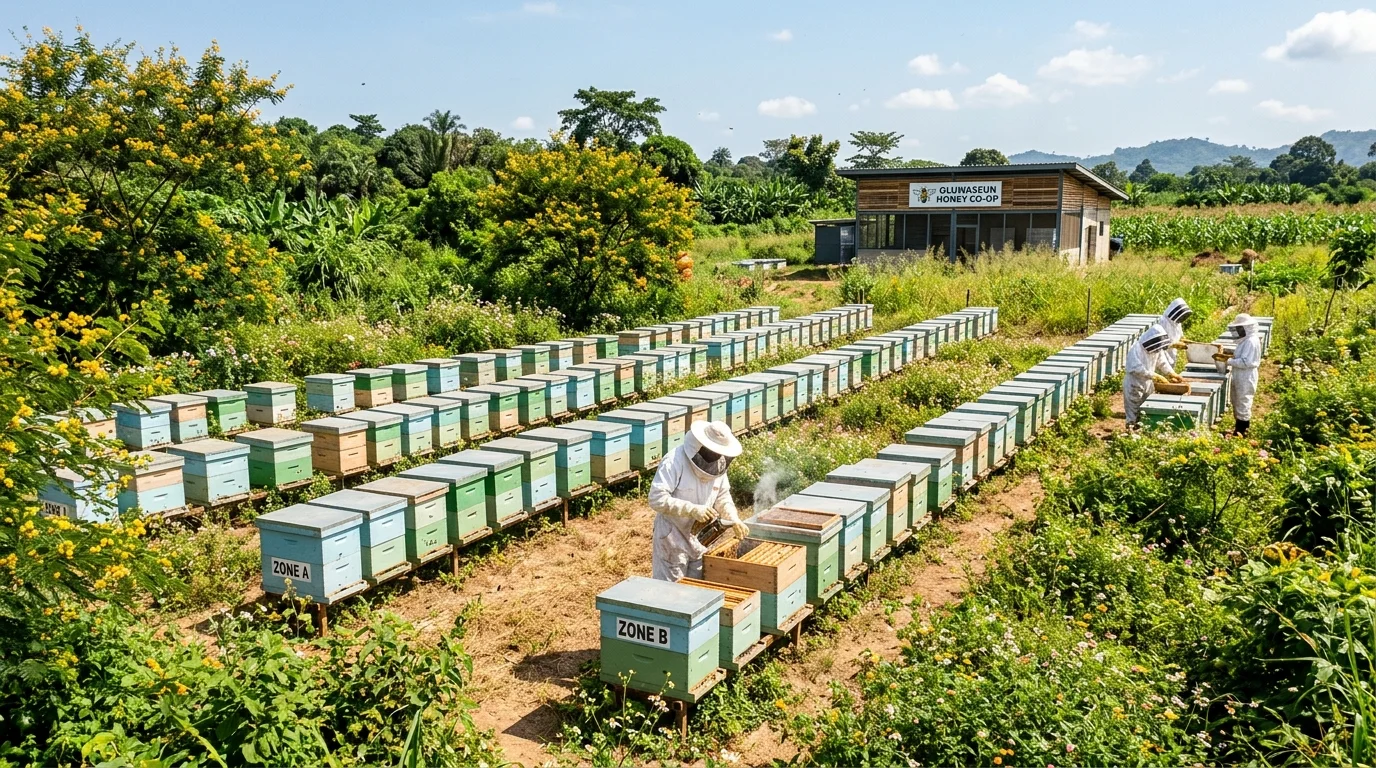
Modern apiary management
Standardized layout, ergonomic hive spacing, and bio-secure apiary perimeters.
Healthy bee colonies
Ethical baiting, colony splitting, queen health monitoring, and nutritional forage access.
Professional beekeeping practices
Protective gear, non-destructive smoke management, and seasonal inspection regimens.
Responsible honey harvesting
Harvesting only mature capped honey frames while preserving necessary colony food reserves.
Quality control
Strict moisture testing, purity verification, zero chemical additives, and batch tracking.
Honey processing and packaging
Hygienic cold centrifugal extraction, settling, micro-filtration, and tamper-evident food-grade containers.
Beeswax and other bee product recovery
Processing clean comb wax, propolis resin tinctures, pollen granules, and royal jelly.
Market development
Structured off-take relationships with retail consumers, supermarkets, hotels, and industrial manufacturers.
Youth training and employment
Apprenticeship programs developing modern technical skills in apiary maintenance and harvest management.
Pollinator conservation
Safeguarding wild bee ecosystems, avoiding hazardous synthetic pesticides, and fostering biodiversity.
Potential agricultural pollination services
Deploying managed hives to boost fruit, seed, and oil palm yields across partner farms.
We are currently exploring suitable locations, technical requirements, operating models, market opportunities, potential partnerships, and the economics required to build a sustainable business.
Our Long Term Vision
We envision an apiculture business that goes beyond simply keeping bees.
The long term objective is to develop a network of productive apiaries connected to processing, packaging, distribution, and value added bee products.
If the model proves commercially and operationally viable, it could eventually be expanded through partnerships with farmers, landowners, agricultural communities, institutions, and other businesses.
For now, we are focused on understanding the opportunity properly, building the right technical foundation, and determining how Trisipia can develop a responsible and commercially sustainable solution.
Partner on the Trisipia Commercial Beekeeping Initiative
Trisipia Limited approaches this project as a value-chain developer and capital structurer. We welcome dialogue with agricultural landowners, apiculture technical experts, research institutes, environmental foundations, and commercial off-takers across Nigeria.